Self-Service Automation That Keeps the Focus on Flying
A great simulator session shouldn't start with "IT work." The goal at XLB Simulations is that when you arrive, you can get to what matters: setting up the flight deck, running the flows, and operating the aircraft — not operating the simulator.
Why startup is the hard part
That sounds simple, but a full-scale setup is a small ecosystem: multiple PCs, displays and peripherals, external systems, and software that all need to come up in the right order. If something is already running, if a device takes longer than usual, or if a window opens on the wrong screen, the whole experience quickly turns into troubleshooting.
A self-service automation layer
To remove that friction, we've been building a session automation layer around the simulator — the layer that makes self-service flying possible. The user-facing part is intentionally minimal: a dedicated kiosk launcher in the sim room that turns a "start" into a predictable sequence, and an "end" into a clean shutdown. The aim is a session that feels professional and repeatable — every time.
The idea is simple: arrive, brief, fly. Startup should be a predictable flow rather than a scavenger hunt for windows and applications. In-session tasks move to the EFB tablet, so cockpit time stays focused on procedures and aircraft operation. And when the session ends, everything returns to a known-good state for the next crew.
The kiosk experience is also designed around sim operations. It can show the day's schedule, highlight the active session, and display a countdown so it's always clear where you are in the time window. That way, the session rhythm is obvious: start, brief, fly, debrief, secure.
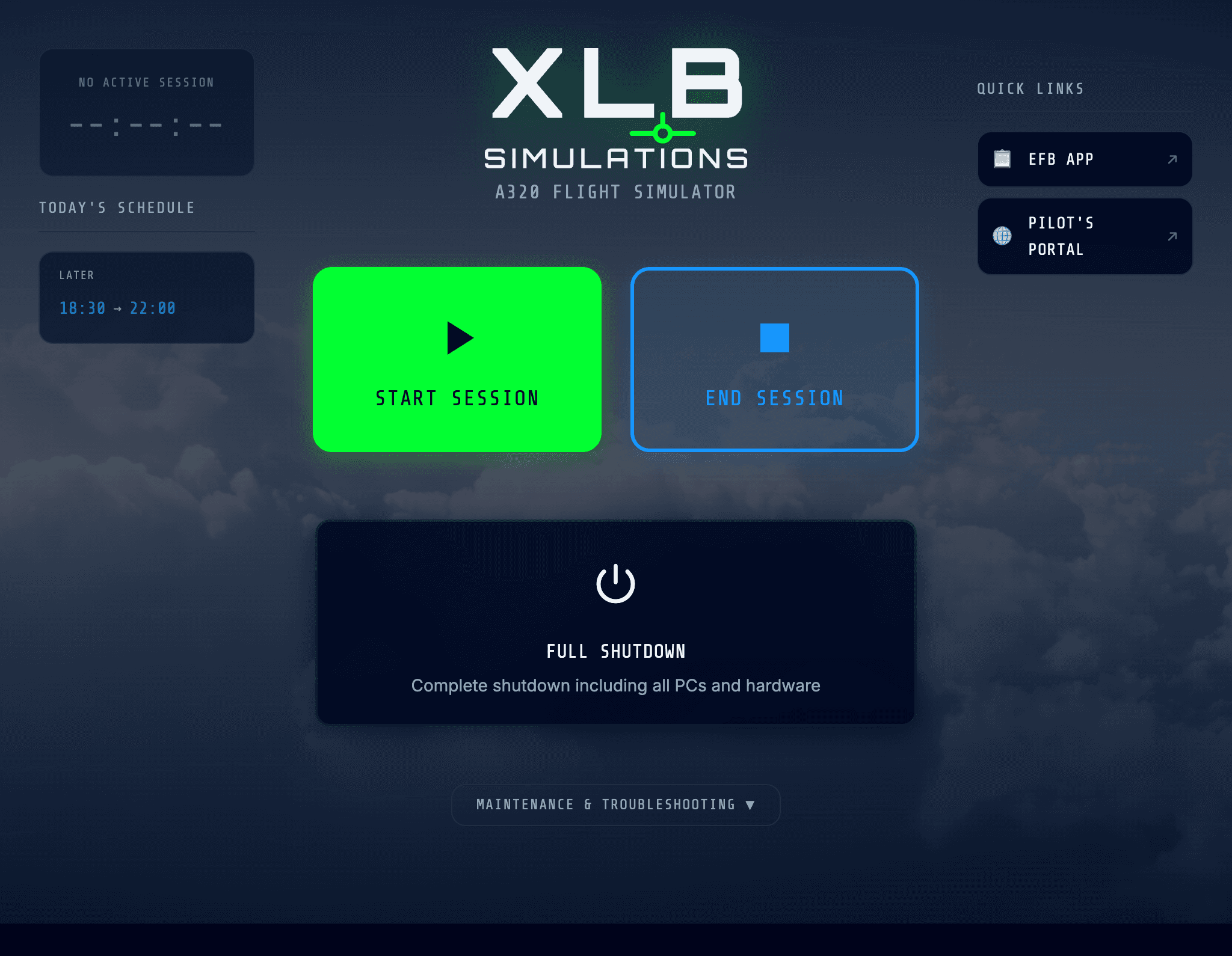
The kiosk also doubles as an Instructor Operator Station, though many of those functions are already available on the EFB. The goal is to eventually provide everything through the tablet — so you can run an entire session without leaving the seat. Just like the real thing, minus the cabin crew bringing you coffee.
The EFB tablet
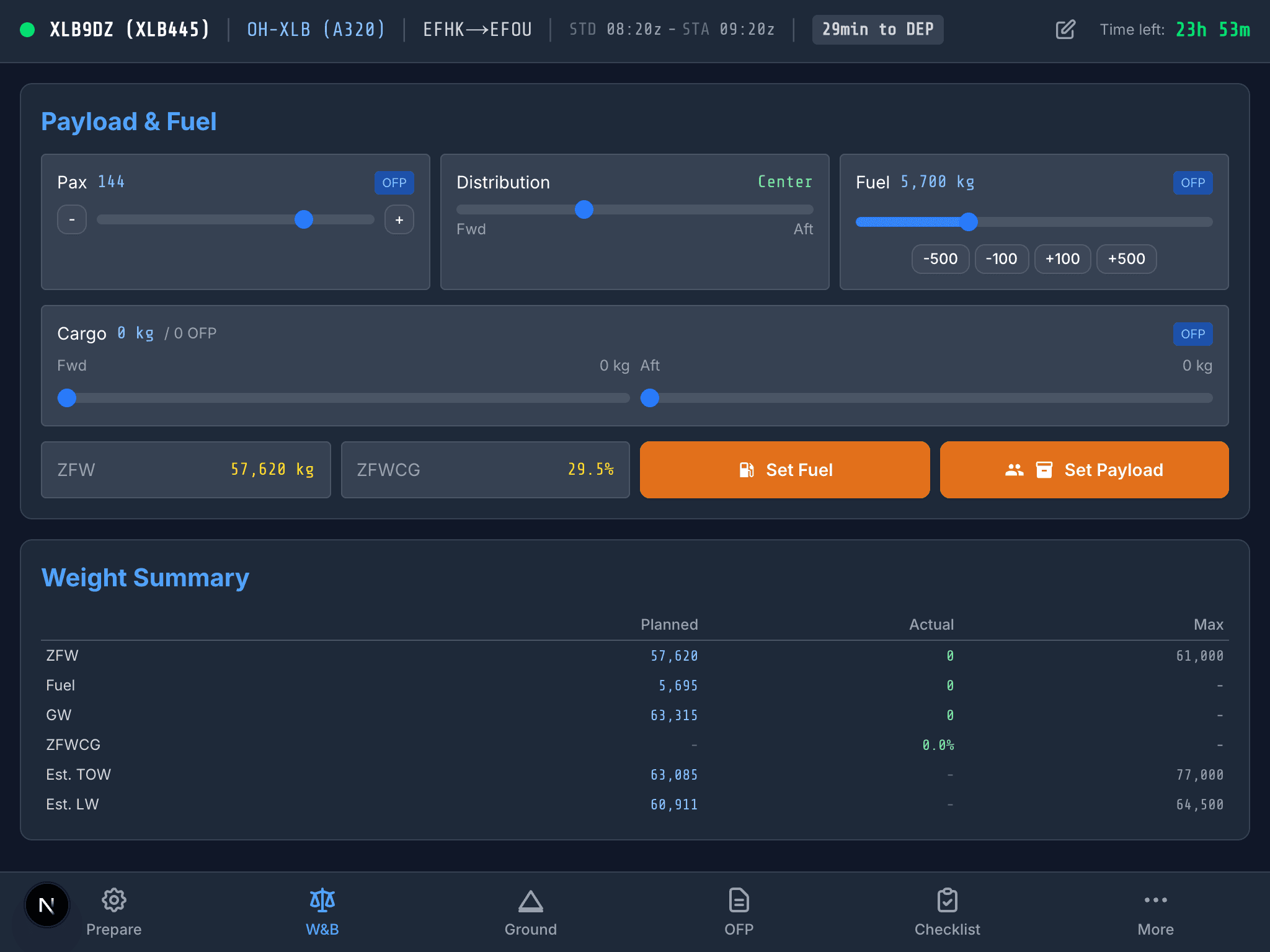
Once the session is running, the EFB tablet becomes the fast path for common flight-deck tasks. Instead of menu hunting and window switching, the EFB brings practical tools into one place: flows and checklists alongside simulator conveniences like ground service controls and turnaround actions.
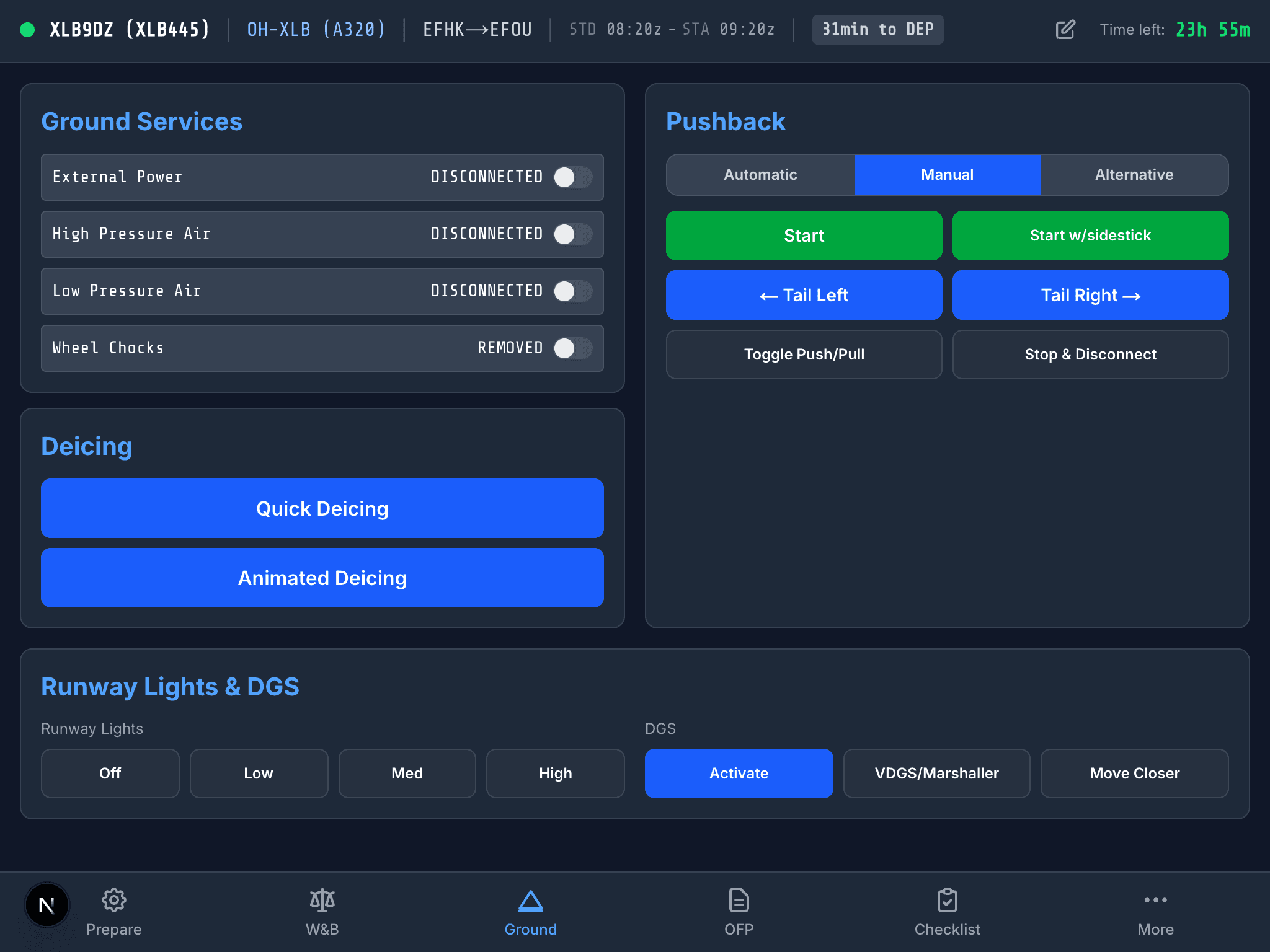
Weight and balance, passenger and cargo loading, and other preparation tasks follow the same approach: structured, repeatable, and always accessible from one interface.
The end-state is straightforward: when the operational layer is solid, the simulator becomes a place to train, explore, and enjoy high-fidelity aircraft operations — with the setup and shutdown handled in the background, the way they should be.
This automation is what makes our self-service model work. Interested in experiencing it yourself? Get in touch to learn more.